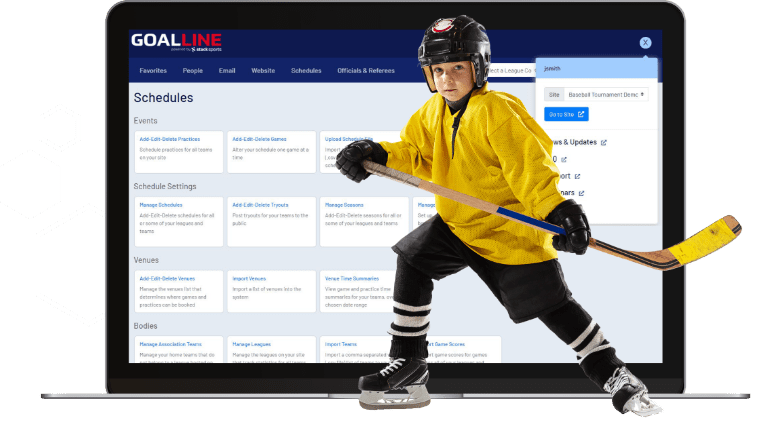
Brewster Ice Arena Powered by Goalline Sports Administration Software

NYSAHA Adult Education

 Adult EDUCATION PROGRAM


PARENTS’ CODE OF CONDUCT

Do not force your children to participate in sports but support their desires to play their chosen sport. Children are involved in organized sports for their enjoyment. Make it fun.

Encourage your child to play by the rules. Remember, children learn best by example, so applaud the good plays of both teams.

Do not embarrass your child by yelling at players, coaches or officials. By showing a positive attitude toward the game and all of its participants, your child will benefit.

Emphasize skill development and practices and how they benefit your young athlete. De- emphasize games and competition in the lower age groups.

Know and study the rules of the game, and support the officials on and off the ice. This approach will help in the development and support of the game. Any criticism of the officials only hurts the game.

Applaud a good effort in both victory and defeat, and enforce the positive points of the game. Never yell or physically abuse your child after a game or practice – it is destructive. Work toward removing the physical and verbal abuse in youth sports.

Recognize the importance of volunteer coaches. They are important to the development of your child and the sport. Communicate with them and support them.

If you enjoy the game, learn all you can about hockey – and volunteer.

SPECTATORS’ CODE OF CONDUCT

Display good sportsmanship. Always respect players, coaches and officials.

Act appropriately; do not taunt or disturb other fans; enjoy the game together.

Cheer good plays of all participants; avoid booing opponents.

Cheer in a positive manner and encourage fair play. Profanity and objectionable cheers or gestures are offensive.

Help provide a safe and fun environment; throwing any items on the ice surface can cause injury to players and officials.

Do not lean over or pound on the glass; the glass surrounding the ice surface is part of the playing area.

Support the referees and coaches by trusting their judgment and integrity.
Be responsible for your own safety – be alert to prevent accidents from flying pucks and

other avoidable situations.

Respect locker rooms as private areas for players, coaches and officials.

Be supportive after the game – win or lose. Recognize good effort, teamwork and sportsmanship.

ADMINISTRATORS’ CODE OF CONDUCT

Follow the rules and regulations of USA Hockey and your association to ensure that the association’s philosophy and objectives are enhanced.

Support programs that train and educate players, coaches, parents, officials and volunteers.

Promote and publicize your programs; seek out financial support when possible.
Communicate with parents by holding parent/player orientation meetings as well as by

being available to answer questions and address problems throughout the season.

Works to provide programs that encompass fairness to participates and promote fair play and sportsmanship.

Recruit volunteers, including coaches, who demonstrate qualities conducive to being role models to the youth in our sport.

Encourage coaches and officials to attend USA Hockey clinics, and advise your board members of the necessity for their training sessions.

Make every possible attempt to provide everyone, at all skill levels, with a place to play.
Read and be familiar with the contents of the USA Hockey Annual Guide and Official

Playing Rules.

Develop other administrators to advance to positions in your association, perhaps even your own.


COACHES’ CODE OF CONDUCT

Winning is a consideration, but not the only one, nor the most important one. Care more about the child than winning the game. Remember, players are involved in hockey for fun and enjoyment.

Be a positive role model to your players. Display emotional maturity and be alert to the physical safety of players.

Be generous with your praise when it is deserved; be consistent and honest; be fair and just; do not criticize players publicly; learn to be a more effective communicator and coach; don’t yell at players.

Adjust to personal needs and problems of players; be a good listener; never verbally or physically abuse a player or official; give all players the opportunity to improve their skills, gain confidence and develop self-esteem; teach them the basics.

Organize practices that are fun and challenging for your players. Familiarize yourself with the rules, techniques and strategies of hockey; encourage all your players to be team players.

Maintain an open line of communication with your players’ parents. Explain the goals and objectives of your association.

Be concerned with the overall development of your players. Stress good health habits and clean living.

To play the game is great; to love the game is greater.

PLAYERS’ CODE OF CONDUCT

Play for FUN.
Work hard to improve your skills.
Be a team player – get along with your teammates.
Learn teamwork, sportsmanship and discipline.
Be on time for practices and games.
Learn the rules and play by them. Always be a good sport.

Respect your coach, your teammates, your parents, opponents and officials.
     Never argue with an official’s decision.

GAME OFFICIALS’ CODE OF CONDUCT

Act in a professional and businesslike manner at all times and take your role seriously.

Strive to provide a safe and sportsmanlike environment in which players can properly display their skills.

Know all playing rules, their interpretations and their proper applications.

Remember that officials are teachers. Set a good example.

Make your calls with quiet confidence; never with arrogance.

Control games only to the extent that is necessary to provide a positive ad safe experience for all participants.

Violence must never be tolerated.
Be fair and impartial at all times
Answer all reasonable questions and requests.
Adopt a “zero tolerance” attitude toward verbal or physical abuse.
Never use foul or vulgar language when speaking with a player, coach or parent.
Use honesty and integrity when answering questions.
Admit your mistakes when you make them.
Never openly criticize a coach, player or other official.
Keep your emotions under control.
Use only USA Hockey-approved officiating techniques and policies.
Maintain your health through a physical conditioning program.
Dedicate yourself to personal improvement and maintenance of officiating skills.
Respect your supervisor and his/her critique of your performance.


ZERO TOLERANCE POLICY

In an effort to make ice and inline hockey a more desirable and rewarding experience for all participants, the USA Hockey Youth, Junior and Adult Councils and the InLine Section have instructed the Officiating Program to adhere to certain points of emphasis relating to sportsmanship. This campaign is designed to require all players, coaches, officials, team officials and administrators and parents/spectators to maintain a sportsmanlike and educational atmosphere before, during and after all USA Hockey-sanctioned games.

Thus, the following points of emphasis must be implemented by all Referees and Linesman:

PLAYERS
A minor penalty for unsportsmanlike conduct (Zero Tolerance) shall be assessed whenever a player:

1. Openly disputes or argues a decision by an official.
2.     Uses obscene or vulgar language at any time, including any swearing, even if it is not directed at a particular person.
3. Visually demonstrates any sign of dissatisfaction with an official’s decision. Any time that a player persists in any of these actions, they shall be assessed a misconduct penalty. A game misconduct shall result if the player continues such action.


COACHES
A minor penalty for unsportsmanlike conduct (Zero Tolerance) shall be assessed whenever a coach:

1.    Openly disputes or argues any decision by an official.
2.    Uses obscene or vulgar language in a boisterous manner to anyone at any time.
3.    Visually displays any sign of dissatisfaction with an official’s decision including standing on the boards or standing in the bench doorway with the intent of inciting the officials, players or spectators.

Any time that a coach persists in any of these actions, they shall be assessed a game misconduct penalty.


OFFICIALS
Officials are required to conduct themselves in a businesslike, sportsmanlike, impartial and constructive manner at all times. The actions of an official must be above reproach. Actions such as “baiting” or inciting players or coaches are strictly prohibited.

Officials are ambassadors of the game and must always conduct themselves with this responsibility in mind.

PARENTS/SPECTATORS The game will be stopped by game officials when the parents/spectators displaying inappropriate and disruptive behavior interfere with other spectators or the game. The game officials will identify violators to the coaches for the purpose of removing parents/spectators from the spectator’s viewing and game area. Once removed, play will resume. Lost time will not be replaced and violators may be subject to further disciplinary action by the local governing body. This inappropriate and disruptive behavior shall include:


     Use of obscene or vulgar language in a boisterous manner to anyone at any time.

     Taunting of players, coaches, officials or other spectators by means of baiting, ridiculing, threat of physical violence or physical violence.

     Throwing of any object in the spectators viewing area, players’ bench, penalty box or on ice surface, directed in any manner as to create a safety hazard.


Goalline Sports Administration Systems
Powered by Goalline Hockey Software